A practical guide for Florida families navigating involuntary treatment, case management, and the intervention process under the Marchman Act.Quick SummaryThe Marchman Act is a Florida law that allows families to petition for involuntary assessment and treatment of a loved one with a substance use disorder.You can file a Marchman Act petition at your county courthouse …

A practical guide for Florida families navigating involuntary treatment, case management, and the intervention process under the Marchman Act.
Quick Summary
- The Marchman Act is a Florida law that allows families to petition for involuntary assessment and treatment of a loved one with a substance use disorder.
- You can file a Marchman Act petition at your county courthouse without an attorney but professional guidance makes the process significantly smoother.
- Case management connects your loved one to services, monitors compliance, and helps coordinate care after assessment.
- Intervention services and the Marchman Act are not the same thing but they are often used together as part of a coordinated care strategy.
- G3 Recovery provides family consulting, professional interventions, and support throughout the Marchman Act process in Florida.
We Want to Do the Marchman Act But We Don’t Know Where to Start
If you’ve landed on this page, you’re probably in one of the hardest situations a family can face. Your loved one needs help. They are refusing it. And someone — maybe a counsellor, a hotline, a Facebook group, or a friend who’s been through it — mentioned the Marchman Act.
Now you have a name. But you still don’t know what to do next.
That feeling is incredibly common. The Marchman Act is one of Florida’s most powerful tools for families dealing with addiction and one of the least understood. This guide is written to change that.
We’ll walk you through what the Marchman Act actually is, how the case management process works, how professional intervention fits in, and exactly where to begin if you’re starting from zero.
What Is the Marchman Act?
The Marchman Act, formally known as the Hal S. Marchman Alcohol and Other Drug Services Act, is a Florida statute that allows family members, three or more adults, or certain professionals to petition a court for the involuntary assessment, stabilization, and treatment of a person who appears to be impaired by substances and is either unable or unwilling to seek help voluntarily.
It was designed specifically for situations where someone has lost the capacity to make rational decisions about their own care due to addiction and where waiting for voluntary cooperation is no longer a safe option.
The Marchman Act is not a punishment. It is a legal framework for compassionate, court-supervised care when someone cannot or will not help themselves.
Unlike the Baker Act — which applies to mental health crises — the Marchman Act is specific to substance use disorders. Both can be used together when someone is experiencing co-occurring mental health and addiction issues, but they are separate legal processes.
Who Can File a Marchman Act Petition?
In Florida, a Marchman Act petition can be filed by:
- A spouse, guardian, or relative
- Three or more adults who have personal knowledge of the individual’s substance use
- A licensed service provider or physician
- A law enforcement officer
Petitions are filed in the county circuit court where the impaired person resides. In most counties, this process begins at the courthouse clerk’s office, and no attorney is required — though legal guidance is often helpful for complex cases.
The Marchman Act Process: Step by Step
Understanding the timeline helps families set realistic expectations. Here’s how the process typically unfolds in Florida:
Step 1: Filing the Petition
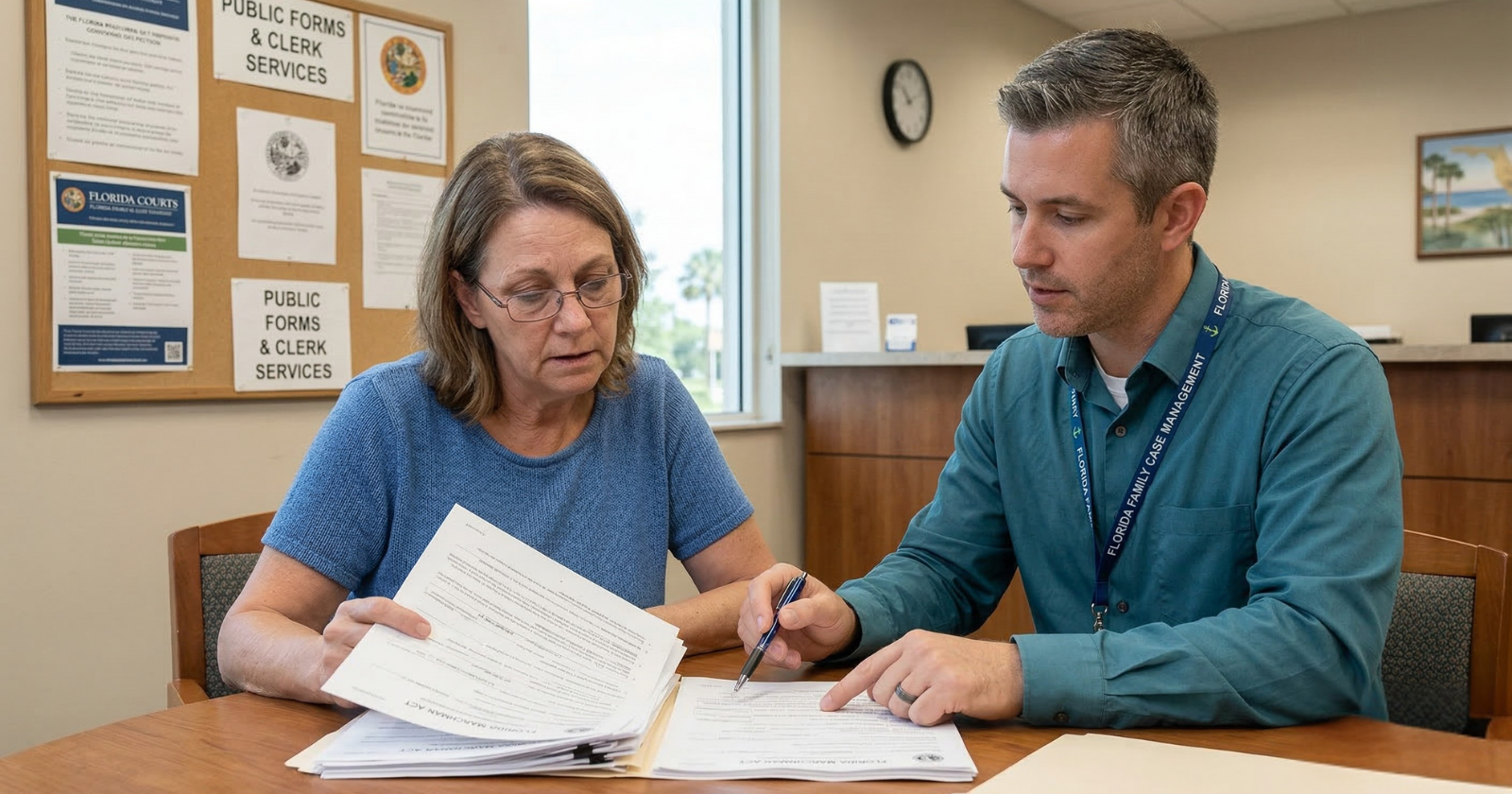
You file a sworn petition at the circuit court clerk’s office in your county. The petition must describe specific behaviors — what you’ve witnessed, when, and why you believe the person is impaired and unable to make rational decisions. Courts do not accept vague or general statements. The more documented and specific your account, the stronger your petition.
Step 2: Ex Parte Order
After reviewing your petition, a judge may issue an ex parte order — meaning the order is granted without the respondent being present. This order directs law enforcement to pick up your loved one and transport them to an assessment facility. This typically happens within 24 to 72 hours of filing, though timelines vary by county.
Step 3: Involuntary Assessment
Once in custody, your loved one is assessed by a licensed clinician. The assessment must be completed within five days. During this time, the facility determines the level of care needed and submits a report to the court.
Step 4: Treatment Hearing
If treatment is recommended, a hearing is scheduled. The court reviews the assessment and may order involuntary treatment for a period of up to 60 days — which can be extended through additional filings if necessary. The person has the right to legal representation at this hearing.
Step 5: Case Management and Aftercare
Once treatment begins, case management becomes critical. A case manager monitors compliance, coordinates between providers, and serves as a bridge between your loved one, the court, and the treatment team. This is where many families breathe a small sigh of relief — and where the real work of recovery begins.
Filing a Marchman Act petition is the beginning of the process, not the end. What happens during case management often determines long-term outcomes.
What Is Marchman Act Case Management and Why Does It Matter?
Case management is the ongoing coordination of services, compliance monitoring, and care navigation that happens after a Marchman Act order is issued. It’s the connective tissue between the legal process and actual recovery.
A case manager working within the Marchman Act framework may:
- Monitor whether your loved one is complying with court-ordered treatment
- Communicate with the treatment facility on behalf of the family and court
- Coordinate transitions between levels of care — detox, residential, outpatient
- Help identify co-occurring mental health issues that require additional services
- File status reports with the court
- Assist with discharge planning and aftercare connections
In Florida, the quality and consistency of case management varies significantly by county and provider. In some areas, public case management resources are stretched thin. That’s why many families choose to work with a private professional interventionist in Florida who can provide dedicated, individualized support throughout the process.
The Case Manager’s Role in the Family System
One of the most underappreciated aspects of Marchman Act case management is its effect on the family — not just the individual in treatment. Families dealing with long-term addiction often experience their own trauma, enabling patterns, and communication breakdown. A skilled case manager can help the entire family system shift into a healthier dynamic that supports recovery rather than undermining it. This is precisely where family consulting becomes a vital part of the process alongside case management.
How Professional Intervention Fits Into the Marchman Act Process
Many families ask: should we try an intervention before pursuing the Marchman Act? Or should we file first and do an intervention later? The answer depends on the situation — and often, the answer is both.
A professional intervention and the Marchman Act are not competing options. They are frequently used together as part of a coordinated, strategic approach to getting someone into care.
Before Filing: Voluntary Intervention First
If your loved one has not yet crossed the threshold of complete refusal — if there is still some part of them that might hear your family’s concern — a professionally facilitated intervention may be the faster, less adversarial path to treatment. The ARISE® invitational model used by G3 Recovery gets over 60% of individuals into treatment within the first week without requiring legal action.
When intervention succeeds, treatment begins sooner, the family relationship is less strained, and your loved one enters care with a higher degree of buy-in — which research consistently links to better long-term outcomes.
When the Marchman Act Is Necessary
There are situations where voluntary intervention is not sufficient or safe:
- Your loved one has overdosed, even once
- They are in immediate physical danger due to their substance use
- They have become aggressive, erratic, or threatening when confronted
- All previous conversations have failed and the situation is escalating
- They are using substances contaminated with fentanyl or other dangerous adulterants — a particular concern given Florida’s ongoing fentanyl crisis in Miami and across South Florida
In these cases, the Marchman Act is the appropriate tool and a professional interventionist in Florida can help families prepare the petition, document the behaviors required, and coordinate the transition into treatment once an order is issued.
After Court-Ordered Treatment: Intervention as Continuation
Even after a Marchman Act order has been fulfilled, the recovery process continues. Many families use ongoing intervention support and family consulting after court-ordered treatment ends to maintain healthy communication, set boundaries, and prevent relapse.
The goal isn’t just getting someone into treatment. It’s creating the conditions for sustainable recovery — and that requires ongoing support for the whole family.
Florida-Specific Considerations for Families
Florida’s size and diversity create unique challenges for Marchman Act cases. What’s available in Miami-Dade is not always available in Citrus County. Understanding the landscape matters.
County Differences
Each of Florida’s 67 counties handles Marchman Act petitions slightly differently. Some counties have dedicated Marchman Act courts with experienced judges. Others process petitions through general civil divisions with less familiarity. Wait times for hearings vary. The availability of licensed assessment facilities in your area affects how quickly the process moves. Families in Orlando, Tampa, and Jacksonville will encounter different county processes, timelines, and facility availability — all factors a local professional can help navigate.
Fentanyl and Synthetic Opioids
Florida continues to see significant harm from fentanyl-contaminated drug supplies. According to the Florida Department of Health’s Substance Use Dashboard, synthetic opioids remain a leading driver of overdose deaths statewide. Families dealing with fentanyl intervention in Florida face a particularly urgent timeline — a delay of even days can be life-threatening.
Transportation and Compliance
Once a court order is issued, getting your loved one to the assessment facility and keeping them there can be a logistical and emotional challenge. Having a trained professional handle sober transport in Florida removes the burden from the family and reduces the risk of conflict or flight during the transition.
Rural and Coastal Access Disparities
Families in smaller Gulf Coast communities, rural North Florida, or the Panhandle often face longer distances to approved facilities and fewer local case management resources. Remote support and careful facility matching become even more critical in these areas.
Where Families Actually Start: A Practical Checklist
If you’re reading this and trying to figure out your next step, here is where most families begin:
Document everything. Write down specific incidents — dates, behaviors, statements, physical signs. Courts need concrete evidence, not general impressions.
Identify your county circuit court. Find the clerk of court for the county where your loved one lives. Most counties have Marchman Act petition forms available online or at the clerk’s window.
Assess safety. If there is immediate danger — overdose, violence, or imminent harm — call 911 first. The Marchman Act is a civil process and does not replace emergency intervention.
Consider professional support. Navigating the petition, documentation, hearing, and case management process alone is possible but having an experienced Florida intervention professional guide you dramatically improves outcomes.
Plan for treatment. The Marchman Act will get your loved one assessed, but you also need to know where treatment is going if the order is issued. Having a facility identified in advance prevents delays.
Prepare your family. The people around your loved one will be part of the recovery environment. Family consulting before and during the process helps everyone show up in a way that supports rather than sabotages recovery.
How G3 Recovery Supports Florida Families Through the Marchman Act Process
At G3 Recovery, we work with families across Florida — from Tampa and Orlando to smaller Gulf Coast communities — who are navigating the Marchman Act, involuntary treatment, and the complex emotional terrain of loving someone in active addiction. Our services are designed to address every stage of the process: before, during, and after.
Professional Interventions
Our ARISE® invitational intervention model is rooted in compassion, not confrontation. We help families prepare emotionally and logistically, align on boundaries, and communicate concerns without blame. When intervention succeeds voluntarily, we facilitate immediate transition into a pre-arranged treatment program. When it doesn’t, we help families decide whether the Marchman Act is the appropriate next step. Learn more about our drug intervention services in Florida.
Family Consulting
Addiction affects the entire family system. Our family consulting services help loved ones understand enabling patterns, establish healthy communication, and build the boundaries necessary for sustainable recovery. Family consulting is available before, during, and after the Marchman Act process.
Sober Transports
Once a court order is issued or a loved one voluntarily agrees to treatment, getting them safely to the facility is its own challenge. Our sober transport services in Florida provide trained, professional transportation that removes the emotional weight from the family and ensures a safe, supported transition.
Recovery Coaching
Recovery doesn’t end when treatment does. Our recovery coaching services provide ongoing support as your loved one re-enters daily life, navigating employment, relationships, and the ongoing work of sobriety. We walk with you through the entire journey.
You Don’t Have to Figure This Out Alone
The Marchman Act is a powerful tool. But like any legal process, it works best when families have support, strategy, and someone who’s helped other families through it before.
If you’re asking where to start, start here: reach out.
You don’t need a completed petition. You don’t need to know every answer. You just need to take one step — and we will help you figure out the rest.
Intervention isn’t about control. It’s about connection. And recovery isn’t just possible — it’s a reality for the majority of people who get the right help at the right time.
G3 Recovery serves families across Florida and beyond. To learn more about how we can help, visit professionalinterventions.com or call us at (214) 927-2154.
Need Immediate Support?
Call us or send a message through our website. A better future can start with one courageous step.
Contact us or call (214) 927-2154 for a confidential consultation with Matt and Hannah Gibson’s team.
Book a Consultation
It’s easy and free!