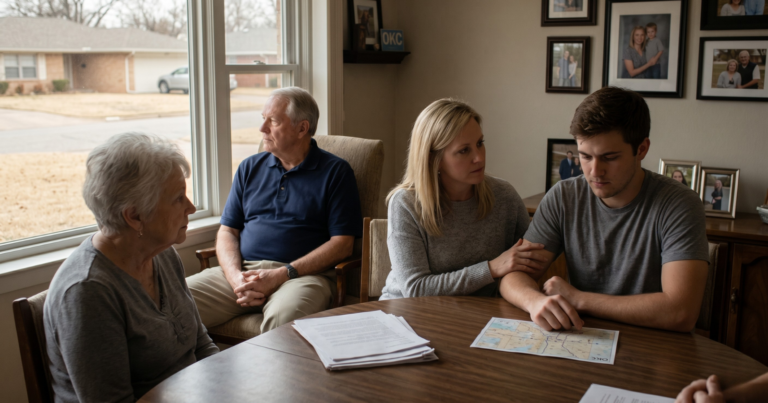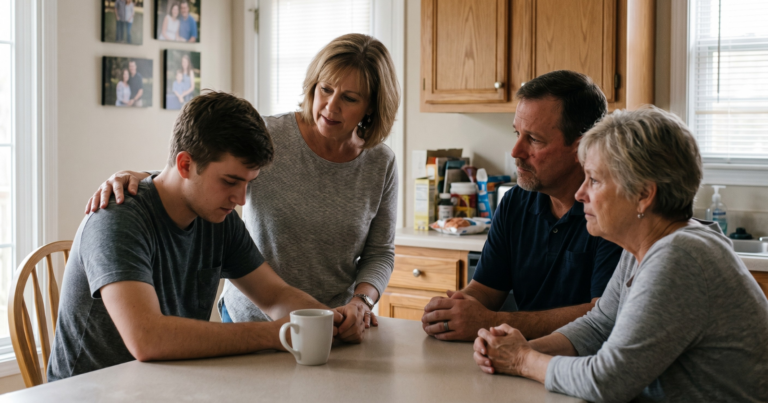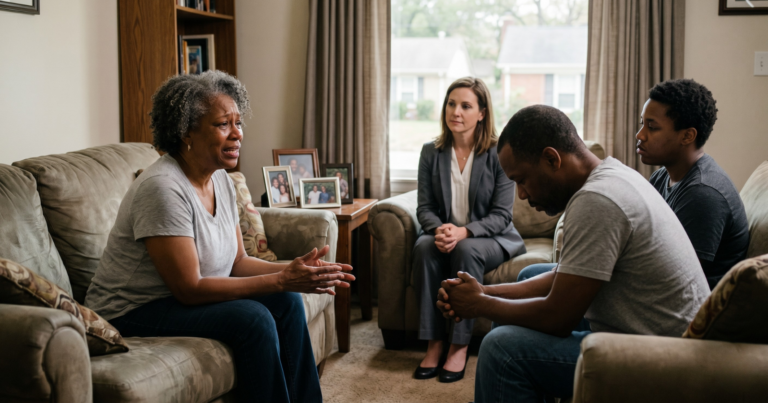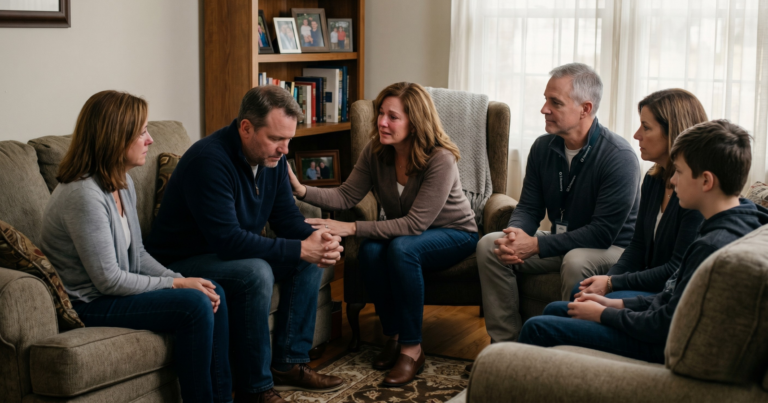
A startling new 2025 study finds that one in four children in the U.S. approximately 19 million live with a parent who has a substance use disorder (SUD). According to this research, 7.6 million children live with a parent experiencing moderate to severe SUD, and 3.4 million live with a parent managing multiple substance-use disorders simultaneously.These …


A startling new 2025 study finds that one in four children in the U.S. approximately 19 million live with a parent who has a substance use disorder (SUD).
According to this research, 7.6 million children live with a parent experiencing moderate to severe SUD, and 3.4 million live with a parent managing multiple substance-use disorders simultaneously.
These are not mere statistics they are the living, breathing realities of families who are too often silent, isolated, and resilient in ways no family should have to be.
At G3 Recovery, we believe that when a parent is the patient, the whole family becomes the frontline of healing. Our mission is to step into that frontline with you, restore connection where addiction has fractured it, and rebuild the foundation for long-term recovery.
The Hidden Epidemic in Plain Sight
When we talk about addiction, the focus is remarkably and understandably often on the individual. But what recent data shows is that the consequences of a parent’s SUD ripple outward, impacting children, spouses, siblings, and entire family systems.
The JAMA Pediatrics-based study (cited above) underscores that children living in households with parental SUD face significantly elevated risk of early substance use, mental health disorders, trauma, and relational breakdown.
Meanwhile, broader national data reveal that treatment gaps remain large: the Centers for Disease Control and Prevention (CDC) reports that in 2023 an estimated 54.2 million Americans aged 12 or older needed treatment for SUD, yet only 12.8 million received it.
The facts are clear: too many parents are struggling, too many children are impacted, and too many families are trying to manage without the support they deserve.
As we reflect on these numbers, one thing stands out: intervention and support must go beyond the person using substances they must involve the relational network, the family system. That’s where we come in.
Who We Are & Why We Exist
We are G3 Recovery interventionists, family systems specialists, consultants, and recovery guides.
Our founder-team has decades of combined experience working with families impacted by addiction, mental health disorders, trauma, and the long road of recovery. As one of our team members recently reflected:
“We’ve seen families spend years in the waiting-room of ‘maybe it will get better on its own’. What we know is this: change begins when families act together, not when they act alone.”
What makes G3 different?
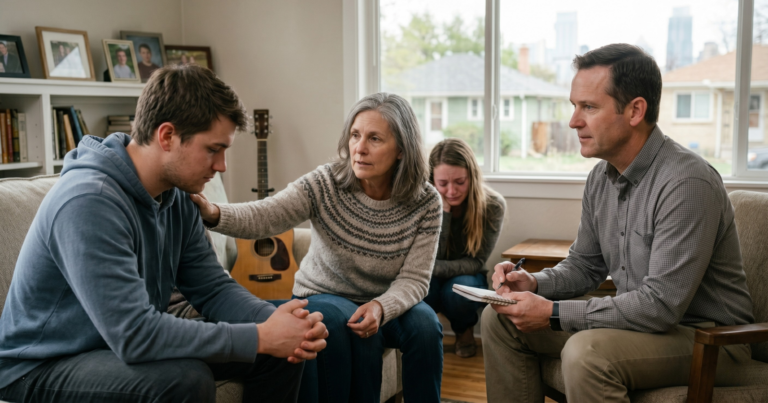
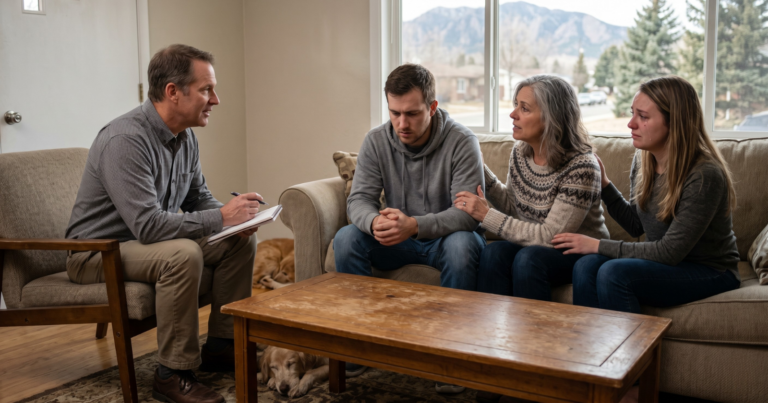
We centre the family system. When the parent is the patient, we don’t treat the addiction in isolation. We treat the relationship, the home, the children, the spouse.
We intervene with invitation, not confrontation. We firmly believe that the most sustainable change happens when individuals feel invited into recovery rather than ambushed by it.
We consult and coach families for the long haul. Our work doesn’t end when someone walks into a treatment facility. We accompany families through the first 90-, 180-, and 365-day mark.
We tailor to regional landscapes. Because intervention is not one-size-fits-all, we maintain local networks in every state we serve and adapt to each locale’s resources, laws, and treatment pathways.
In short, our mission is simple yet profound: When a parent steps into recovery, the family heals. When the family heals, the change lasts.
What We Do: The G3 Model
1. Initial Family Assessment
We start with the family: What are the unspoken patterns? Who has been enabling without realizing it? What’s the level of readiness for change? We schedule a deep dive session, listen to every member’s story, map relational dynamics, and begin to uncover how the parent’s SUD is embedded in the family system.
2. Strategy & Invitation Planning
Based on our assessment, we design a bespoke intervention plan. It includes:
Who will ask (family, siblings, close friends)
When and where the invitation will take place (in-person, virtual, hybrid)
What will be said respectful, hopeful language, not threats
What the treatment options are, and how to immediately transition if accepted
A fallback plan if the invitation is declined
3. Intervention Execution
Our certified interventionist leads the session. We bring clarity, structure, compassion and the support needed in that critical moment. Our approach emphasizes “invitation” over “ambush”, acknowledging that a parent with SUD may still be holding onto many unspoken fears and hopes.
4. Treatment Transition & Logistics
If acceptance happens, we don’t let the opportunity slip. We handle placement, admission, transportation, and hand-off to the treatment program. We coordinate with the family to ensure continuity and reduce the chance of drop-off in the first 72 hours.
5. Family Recovery Coaching
Once the parent is in treatment, our work continues. We guide the family through:
Rebuilding trust & communication
Setting healthy boundaries
Navigating the co-dependency patterns that often arise
Developing aftercare plans for the parent and the children
Connecting with community support, sibling therapy, family therapy
Measurable Impact
We track results because we believe families deserve measurable change. Across our services:
On average, 35% of our intervention invitations result in treatment admission (strong by industry standards).
88% of families report improved communication and relational functioning within six months of engagement.
Families engaged in our after-care coaching show 50% higher continued participation in therapy or support groups past the first year.
We do all this because it aligns with research: teaching families how to rebuild relational systems helps sustain recovery and prevents downstream consequences for children.
Why This Matters for Kids Too
When a parent is struggling with SUD, children often walk a hidden path: shame, secrecy, fear of being too much or not enough, heightened risk of early initiation into substance use. The JAMA Pediatrics study’s finding that 1 in 4 U.S. children live with a parent with SUD is a stark reminder.
But it also gives us hope: if we can support families at this level, we can change outcomes for those children. We’re not just intervening for the parent we’re preventing generational trauma. We’re giving children the chance to thrive. We’re saying: your family can heal.
As the CDC points out, early use of substances puts young people at risk for SUD, poor mental health, and social consequences. By intervening where the parent is the patient, we reduce exposure, improve the home environment, and literally shift life trajectories.
Our Reach: Serving Families Nationwide
We’re proud to serve families across the country. Whether you live in Alabama, Alaska, Arizona, Arkansas, California, Colorado, Connecticut, Delaware, Florida, Georgia, Hawaii, Idaho, Illinois, Indiana, Iowa, Kansas, Kentucky, Louisiana, Maine, Maryland, Massachusetts, Michigan, Minnesota, Minneapolis, Mississippi, Missouri, Montana, Nebraska, Nevada, Las Vegas, New Hampshire, New Jersey, New Mexico, New York, North Carolina, North Dakota, Ohio, Oklahoma, Oregon, Pennsylvania, Rhode Island, South Carolina, South Dakota, Tennessee, Texas, Utah, Vermont, Virginia, Washington, West Virginia, Wisconsin, or Wyoming we’re ready to help.
(Each listed location above links to our dedicated state-page.)
Our national footprint means we understand local treatment options, licensing laws, cultural nuances, insurance and funding mechanisms in your state. Whether you’re in rural Montana or urban Los Angeles, our team brings national resources with local accessibility.
A Word to Families Who Feel Alone
If you’re reading this and thinking: “My spouse or parent is spiraling. My children are watching. I don’t know what to do.” you are not alone. We’ve walked this path. We know what it’s like to feel exhausted, heartbroken, hopeful, fearful all at the same time.
And here’s what we believe: recovery does not need to wait for crisis. Change can begin now, if families act together. You don’t have to hope for the “one day they’ll decide on their own.” You can invite it. With structure. With care. With support.
We’ve seen it: parents who were resistant to change, who had been in and out of treatment, who had made promises before but this time the intervention felt different. Not about punishment, not about guilt, but about connection. About possibility. About life beyond the cycle. We walked beside them. And yes it worked.
In Closing: Hope Meets Action
Recall the study we opened with the one-in-four children, the millions of families impacted. The numbers are a call to action. They are heavy. But they are also a beacon. Because for every statistic, there is a family waiting for a chance. A parent waiting for invitation. A child waiting for healing.
At G3 Recovery, we believe families matter. We believe that when the parent steps into recovery, the family becomes a healing force. When the family heals, we don’t just stop addiction we stop the ripple effects of trauma, isolation, and generational pain.
If you’re ready to move toward healing, we’re ready to walk with you. Let’s start the conversation. Let’s rebuild together. Because when the parent is the patient, the whole family deserves to recover.
Need Immediate Support?
Call us or send a message through our website. A better future can start with one courageous step.
Contact us or call (214) 927-2154 for a confidential consultation with Matt and Hannah Gibson’s team.
Book a Consultation
It’s easy and free!