QUICK SUMMARY Florida's fentanyl overdose deaths are falling for the first time in a decade — but polysubstance contamination is still rising. Here's what that means for families in crisis right now. •Fentanyl deaths are down statewide — but the data reflects deaths, not use, and xylazine contamination is still spiking •Fentanyl is still being …

QUICK SUMMARY
Florida’s fentanyl overdose deaths are falling for the first time in a decade — but polysubstance contamination is still rising. Here’s what that means for families in crisis right now.
- •Fentanyl deaths are down statewide — but the data reflects deaths, not use, and xylazine contamination is still spiking
- •Fentanyl is still being cut into pills sold as Adderall, Xanax, and oxycodone across Florida
- •Covers Miami, Tampa, Orlando, and Jacksonville — each city has a distinct drug and family profile
- •Treatment fraud is a real risk in South Florida — includes warning signs every family should know
- •ARISE® invitational model: 60%+ enter treatment within the first week — no surprise confrontation
- •The Marchman Act and private intervention are not the same — both tools are often used together
- •The 72-hour window after “yes” is the highest-risk point — sober transport and aftercare are critical
On April 24, 2026, a string of Florida news outlets reported what looked like uncomplicated good news: state and federal data show fentanyl overdose deaths in Florida are dropping significantly. The headline numbers are real. The trend is moving in the right direction for the first time in nearly a decade. After years of bad news out of every Florida county, this is something to take a breath about.
And then the same reporters quoted the people working closest to the crisis, who said the same thing in a softer voice: the data doesn’t tell the whole story. Real risk hasn’t dropped at the same rate. Polysubstance contamination is still spiking. Test strips are catching xylazine in places they didn’t even look six months ago. If you’re a parent in Tampa or a wife in Orlando watching the numbers improve while your specific worry hasn’t changed, you’re not imagining the gap. If you’re searching for a professional interventionist in Florida right now, the trend lines and your family’s reality are two different conversations.
This piece is about that gap. What the falling numbers do mean, what they don’t mean, and what a Florida family can do this week if they’ve decided that “we’ll figure it out eventually” is no longer a plan.
What the falling numbers are saying, and what they aren’t
The decline is genuine. As reported by WFLX, Florida’s fentanyl overdose deaths fell sharply year over year. The downward slope started showing up in 2023 data and has been steepening since. Increased naloxone distribution, the Florida Department of Health’s harm reduction expansions, and the settlement-funded treatment scaling that DeSantis announced in 2023 are all contributing. The state’s broader public-health response, tracked on the Florida Substance Use Dashboard, is producing measurable change.
Here’s what the experts in those April articles said next, almost in unison: the numbers reflect deaths, not use. They reflect what naloxone reverses, not what’s happening at home. They reflect the substances medical examiners are testing for, not the contamination patterns that have shifted. Fentanyl is still showing up cut into things people don’t expect, including pills sold as Adderall, Xanax, and oxycodone. Xylazine, a veterinary tranquilizer that doesn’t respond to naloxone, is now appearing in Florida supply at rates that didn’t exist three years ago.
Translation: a family’s specific risk hasn’t necessarily fallen at the same rate the state’s averages have. Your loved one is one person, not a population trend.
And there’s a part of this story the state can’t fix no matter how good the numbers look: nobody at the Department of Health is going to call your son. Nobody at the Florida Recovery Center network is going to walk into your daughter’s apartment and say what needs to be said. Public dollars build infrastructure. They don’t make the call inside your family that has to happen first.
The gap nobody’s funding
Most Florida families wait too long. Not because they don’t care. They wait because each individual day looks survivable. Yesterday they made it. Today they’ll make it. Tomorrow they’ll talk about it, maybe, when things calm down. But things don’t calm down. They escalate, and in the era of contaminated supply they escalate faster than families used to plan for. The CDC’s overdose surveillance data still shows that the runway between “manageable problem” and “preventable death” can collapse to a single night. A pill from a friend. A relapse after thirty days clean. A bump of cocaine that wasn’t just cocaine.
The waiting itself becomes the most expensive thing a family does. And it’s expensive in ways that don’t show up on any state dashboard. It’s expensive in trust, in marriages, in younger siblings who learn that the loud one always gets the help. By the time a Florida family contacts a professional interventionist, they’ve usually been in the thick of it for three to seven years.
This is why our team built G3 Recovery the way we did. Both founders, Matt and Hannah Gibson, have lived this from inside. Matt is a Certified ARISE® Interventionist; Hannah is in long-term recovery. They’ve been through the version of this story where nobody knew what to do, and the version where somebody finally did. The difference between those two outcomes wasn’t the broader trend lines. It was a structure for the conversation, a plan for the next forty-eight hours, and a person on the phone who’d done it before. You can read more about the team and the model on the Who We Are page.

What the gap looks like in Florida’s four big metros
The shape of addiction in Florida isn’t uniform. Each major metro has its own version of the same crisis, and the right way in changes accordingly.
In Miami, the dominant story is polysubstance use, with cocaine and ketamine driving social-circle exposure that families don’t always see coming. Fentanyl contamination in stimulants is hitting harder here than in some other Florida metros, and it’s hitting younger demographics. Our team works on drug intervention in Miami with a parallel track for fentanyl intervention in Miami tuned for that polysubstance reality.
In Tampa, alcohol still dominates the calls we take, often layered with prescription benzodiazepines. The corporate culture across the I-4 corridor creates a particular kind of high-functioning denial: the person is still going to work, still closing deals, still showing up to family events, and the spiral is invisible until it isn’t. We support those families with alcohol intervention in Tampa work tuned for high-functioning use. For families dealing with the legal and clinical complexities Florida’s Marchman Act introduces, our existing resource on the Florida Marchman Act walks through how the involuntary-commitment statute fits with private intervention work.
In Orlando, opioid pills are still the most common call we take, with a younger demographic skew than the state average. Parents are often watching from elsewhere in the country and trying to coordinate care across distance. Our drug intervention in Orlando work is built around long-distance family coordination plus same-state treatment placement.
In Jacksonville, methamphetamine and fentanyl polysubstance use is showing up in ways the state-level statistics don’t fully capture. We handle these as drug intervention in Jacksonville, with a tighter focus on treatment placement and family education for parents who don’t yet realize how layered the use pattern has become.
Florida is also a state where treatment fraud is a real risk, especially in South Florida. If you’re sorting offers and trying to figure out who’s legitimate, our piece on the Florida Shuffle walks through the warning signs we tell every family to watch for.
The point isn’t that geography determines fate. It’s that the right intervention starts with an honest read of what’s actually happening, not a generic script.
What a real Florida intervention looks like
The Hollywood version of an intervention, surprise circle in the living room, one big confrontation, person breaks down and goes to rehab, isn’t the model that works in 2026. It’s also not the model the Gibsons use. We use the ARISE® Invitational model, which has roughly six decades of clinical evidence behind it and a published outcome of 60 percent or more of the identified loved one entering treatment within the first week.
Here’s how that actually unfolds in Florida, in plain terms:
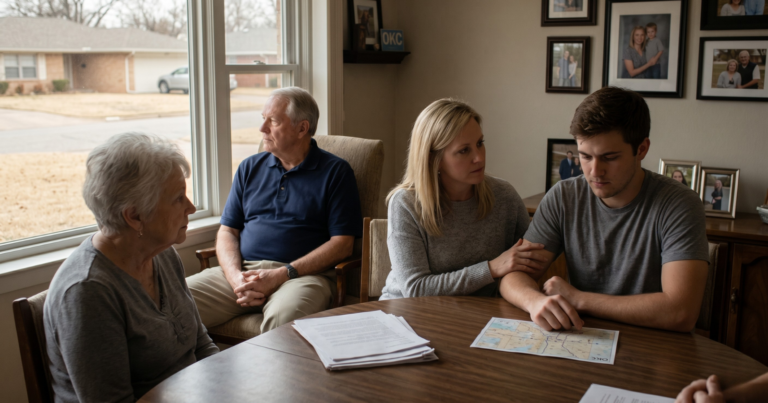
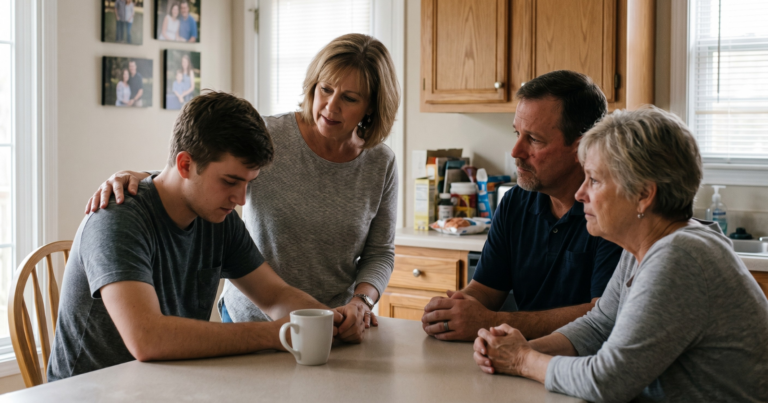
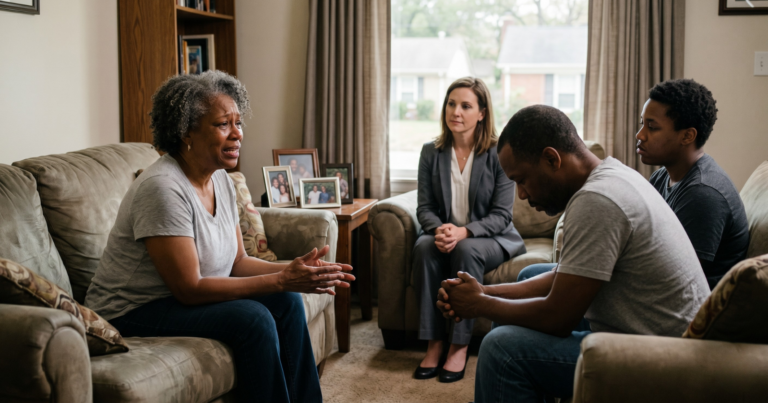
A family contacts us. Usually a spouse or a parent. We schedule an initial consultation, often the same day, and we talk through what’s happening, who’s involved, what’s already been tried, what’s making it worse. We map the family system: who’s enabling without realizing it, who’s isolated, who has the leverage, who has the trust.
We invite the loved one to a meeting. Not a surprise. The Invitational model means the person who is using knows the meeting is happening and is invited to join. Most do. The ones who don’t, we still hold the meeting without them, because the family’s healing doesn’t depend on whether the person says yes that day.
We work the framework G3 calls RECLAIM, our gather-guide-grow approach: gather the family network, guide the conversation with a structured agenda, and grow the changes through aftercare and continuity. Treatment placement is part of it. So is family consulting, recovery coaching, and, when the moment comes, sober transport in Florida so the loved one actually arrives at treatment instead of disappearing in the parking lot.
Most families are surprised by how non-confrontational the process is. There’s no shouting. There’s no ambush. There’s a structure, and somebody experienced running it, and the structure does the work that families have been trying to do alone for years.
After the yes
A yes is not the end. It’s the start of a new fragility.
The first 72 hours after a person agrees to treatment are statistically the highest-risk window of the entire process. Plans fall apart. Phones get used. Friends show up unannounced. The body’s withdrawal accelerates faster than the family’s logistics. This is where most untrained interventions lose people.
It’s also where professional aftercare matters most. Our recovery coaching and family consulting work picks up the moment treatment placement is confirmed and stays in the picture as long as the family wants. Not as a sales handoff, but as continuity. The Gibsons are in long-term recovery themselves; they know what week three looks like and what month six looks like, and they’ve watched too many families lose somebody in the gap between rehab discharge and “back to normal life.”
What the falling numbers can’t fix, and you can
So back to the headlines.
They’re real. The decline matters. Florida is producing public-health gains that didn’t seem possible five years ago. That’s worth saying out loud.
But the average doesn’t make the call from your family. That part is still on you.
If you’re in the deciding part of this, where you’ve watched too many small things and you’re starting to suspect there isn’t going to be a clean window when everything calms down on its own, the most useful thing you can do this week is talk to somebody who has done this before. We’re at (214) 927-2154, or you can start a confidential conversation here. No pressure, no script. Just a real human who has been on both sides of the situation you’re sitting in.
The state’s numbers are doing their job. Now your family gets to do yours.
Frequently Asked Questions
If Florida’s numbers are improving, do I really need an intervention?
The state’s averages don’t tell you what’s happening to a specific person in your family. We’ve never had a family contact us because their loved one was statistically average. They contact us because something is wrong at home and the trajectory has been getting worse, not better. The trends and your family’s reality are different conversations.
How fast can G3 schedule an intervention in Florida?
For most Florida families, an initial consultation happens within 24 to 48 hours of the first call. The intervention itself is typically scheduled within one to two weeks, depending on the family’s logistics and the urgency level we assess on the consult.
Does the Marchman Act replace what an interventionist does?
No. The Marchman Act is a legal mechanism for involuntary assessment and treatment in Florida. A professional intervention is a clinical and family-system process that often runs alongside or instead of Marchman Act proceedings. Many Florida families use both, and we coordinate with attorneys and case managers when that’s the right fit.
How do I avoid Florida’s treatment fraud problem?
Pick treatment placement through clinically-credentialed referral networks, not lead-generation websites. Our intervention process includes treatment vetting, insurance pre-authorization, and direct relationships with facilities we’ve worked with for years. The “Florida Shuffle” rarely happens to families who go through structured intervention; it happens to people who Google rehab in a crisis.
Are state-funded programs in Florida the same as what G3 does?
No. State-funded programs handle public-health work: medication access, hospital crisis services, harm reduction, the Marchman Act process. G3 is a private clinical intervention practice. We work with families one-on-one to plan, run, and follow through on interventions and family consulting. The two systems complement each other; they don’t substitute.
Book a Consultation
It’s easy and free!