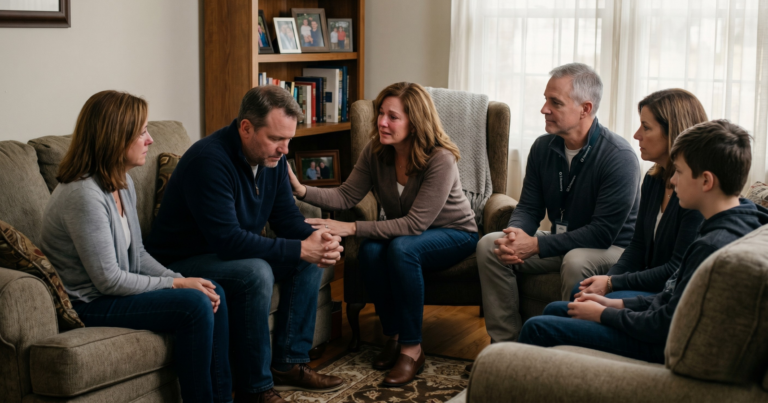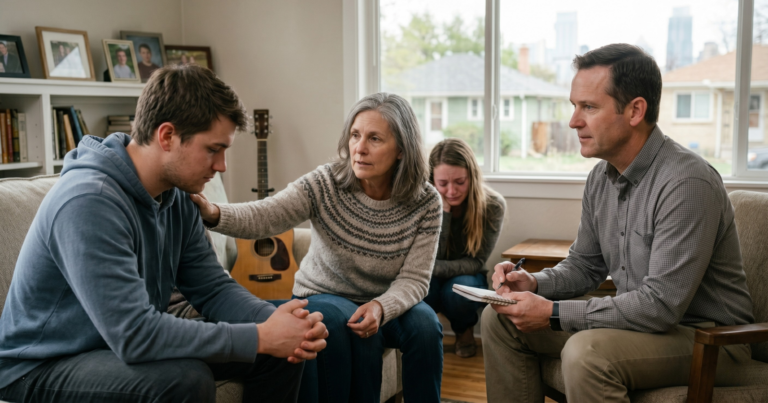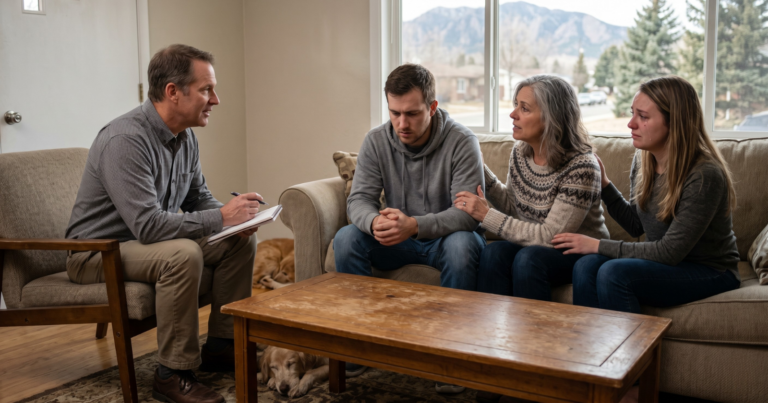
Not every intervention ends with someone agreeing to go to treatment. This is a reality that families need to understand before the process begins, not because refusal is the likely outcome, but because the fear of refusal is one of the primary reasons families delay intervention, sometimes for years. Understanding what happens when someone says …

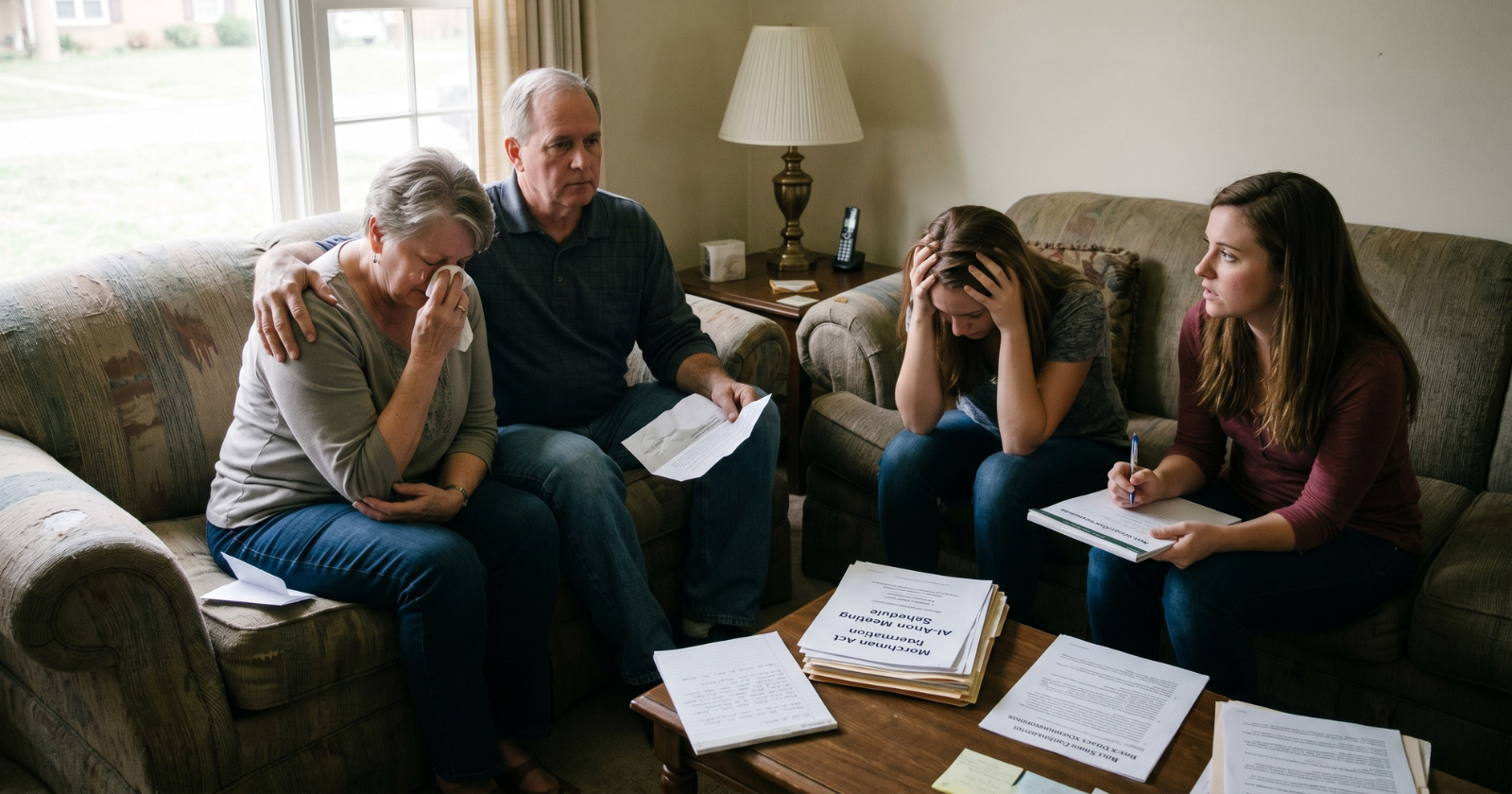
Not every intervention ends with someone agreeing to go to treatment. This is a reality that families need to understand before the process begins, not because refusal is the likely outcome, but because the fear of refusal is one of the primary reasons families delay intervention, sometimes for years.
Understanding what happens when someone says no and what it doesn’t mean is one of the most important things we do in pre-intervention family preparation.
Here’s the truth about refusal, and what comes next.
Refusal Is Not the End of the Story
The most significant misunderstanding families have about a “failed” intervention is that it closes the door. It doesn’t. In most cases, an intervention that didn’t result in immediate treatment acceptance still plants seeds that matter over time.
The person heard what their family said. They heard the specific, honest, prepared statements from people who love them. They heard the consequences articulated clearly. Even if they walked out of the room saying no, they carry that with them. The denial structure has been disrupted, even if it reasserted itself in the moment.
We’ve worked with families in Tennessee, South Dakota, Montana, and Delaware where a loved one said no at the intervention and then called the family two days later ready to go. Or three weeks later. Or six months later. The intervention was not a failure. It was the beginning of a process.
The Consequences Must Be Real
If the family articulated consequences in the intervention, “If you don’t go to treatment, I will no longer allow you to live in this house,” “We will not continue to pay your rent,” “I will be filing for separation”, those consequences must actually happen.
This is the hardest part of intervention aftercare when a loved one refuses, and it’s where families most frequently falter. The consequences feel cruel in the moment. The person is still struggling. Following through feels like abandonment.
But if the consequences aren’t real, everything else the family said loses credibility. And the next intervention, whether it happens in weeks or months, starts from a weaker position.
When we prepare families, we spend considerable time on consequence planning, specifically because we know that executing those consequences after a refusal is emotionally brutal. Families in Atlanta, Dallas, and Phoenix often have complex financial entanglements with their loved ones that make consequence follow-through especially difficult. We help families think through the specifics before the intervention, not in the chaos after a refusal.
What “Not Enabling” Actually Looks Like After a Refusal
After a refusal, families often ask us what they’re supposed to do now. The answer is both simple and genuinely difficult: stop doing things that make the addiction easier to sustain.
That doesn’t mean cutting off all contact. It doesn’t mean speaking to them again. It means not doing the things that insulate your loved one from the natural consequences of their use.
In practical terms, that often looks like:
- Not covering rent, utilities, or other living expenses
- Not making excuses to employers, extended family, or others
- Not providing transportation to or from places associated with use
- Not engaging in extended crisis conversations at 2 am that exhaust the family without producing change
- Not pretending everything is fine at family events while privately managing the secret
This is different for every family, and it depends heavily on the specific enabling patterns that have developed. We work with families after a refusal to identify their specific patterns and build practical plans for changing them.
When to Consider a Second Intervention
A second intervention, when done correctly, is not simply a repeat of the first. It incorporates what was learned what worked emotionally, what didn’t land, where the family needs to be stronger, and whether there are family members who weren’t part of the first intervention who should be in the second.
There’s no fixed timeline for when to attempt a second intervention. Some families are ready in weeks. Others need more time to execute consequences and allow the situation to develop further. The right timing is often when a new significant consequence has occurred: a job loss, another health event, a relationship that has broken down, which adds urgency and reality to the family’s message.
Our Montana team has managed several cases where the second intervention, done three to six months after the first, was the one that produced treatment acceptance. The first wasn’t wasted; it was the groundwork.
The Role of Involuntary Commitment Laws
In some states, families have legal recourse when a loved one is an imminent risk to themselves or others and refuses voluntary treatment. These laws vary significantly by state — Florida’s Marchman Act is one of the most well-known, but many states have similar provisions.
Involuntary commitment is not intervention, and we approach it differently. It’s a legal tool, not a therapeutic one, and its effectiveness for long-term outcomes is mixed when used in isolation. But for families in specific crises, particularly when someone is at immediate risk, understanding what legal options exist is part of the picture.
In Delaware, South Dakota, and Tennessee, where our teams work, we can help families understand what options exist under state law and whether any of them are appropriate for their situation. This is always a secondary tool, not a first resort.
Alcohol-Specific Considerations After Refusal
Alcohol refusals carry a particular challenge because the cultural scaffolding around drinking makes it easier for a person to construct a narrative that the family overreacted. “Everyone drinks like this.” “You all just don’t understand what my life is like.” “I’m not like those people in AA.”
Families dealing with alcohol refusals in markets like Dallas and Phoenix often find that their loved one doubles down on that normalization narrative after a refusal. The response is not to argue with the narrative; you will not win that argument, but to continue executing consequences consistently and maintaining relationships that don’t center on the drinking.
The social reality of the person’s life will eventually provide its own arguments if the family stops insulating them from it.
What Families Need After a Refusal
The aftermath of a refusal is one of the hardest emotional spaces we encounter. Families have gathered, prepared, opened themselves up, said things they’ve never said out loud and been told no.
The grief in that moment is real. The anger is real. The exhaustion is real.
What families need in this period:
Their own support structure. This is the moment to be consistent about Al-Anon, therapy, and support groups, not as a secondary priority but as the primary one. The family’s well-being cannot be held hostage to the loved one’s decision-making.
Communication with our team. We don’t close a case after a refusal. Families can continue to reach out to us with questions, with updates, and when they think the timing might be right for another attempt.
Patience without passivity. Waiting for the right moment is different from going back to the old patterns. The family can be patient about timing while being active about changing what they do in the meantime.
Refusal is hard. But it is not the end. And families who handle the aftermath well, who follow through, who take care of themselves, who stay in contact with support, are the families whose loved ones most often eventually say yes.
Book a Consultation
It’s easy and free!