QUICK SUMMARY When someone finally says "I'll go," the window can close within hours. In Texas — where families can be hours from the nearest treatment facility — how a loved one gets there is just as critical as the decision itself. •Texas records ~3,136 overdose deaths per year — meth is now the DEA's …


QUICK SUMMARY
When someone finally says “I’ll go,” the window can close within hours. In Texas — where families can be hours from the nearest treatment facility — how a loved one gets there is just as critical as the decision itself.
- •Texas records ~3,136 overdose deaths per year — meth is now the DEA’s #1 drug threat across all Texas field divisions
- •The drive from Amarillo to Houston is roughly the same distance as NYC to Chicago — geography is a real barrier
- •~50% of alcohol-dependent patients relapse within 3 months of detox — the transport window is among the most fragile
- •Meth withdrawal can cause psychosis, paranoia, and combative behavior — a family member is not equipped to manage this alone
- •Texas HHS officially recognizes peer-supported transportation as an evidence-based recovery support service
- •1 in 4 Texans has experienced an overdose or knows someone who has — the crisis reaches every corner of the state
- •Act immediately when willingness surfaces — do not wait to confirm it, the window closes fast
Most families spend months, sometimes years, trying to get a loved one to say yes to treatment. They have the conversations. They beg. They set boundaries. They cry in the car on the way home from yet another failed attempt. And then one day, unexpectedly or not, something shifts. The person in the grip of addiction looks up and says, “I’ll go.”
That moment, that fragile, hard-won, unpredictable moment, is not the end of the battle. In many ways, it is the beginning of the most critical chapter. And it is precisely the moment that most families are completely unprepared for.
Because what happens in the hours between “I’ll go” and actually walking through a treatment center’s front door can determine whether recovery begins or whether the window closes again, sometimes permanently.
In Texas, where families can be hours from the nearest appropriate treatment facility, where the drug supply is more dangerous than ever, and where the emotional pull of familiar environments and familiar substances can unravel the best of intentions before a bag is even packed, this gap is not a minor inconvenience. It is where recovery can be lost before it ever begins.
Why Texas Makes This Harder Than Most States
Texas is not like other states. Despite its proximity to the southern border, a main source of illegal fentanyl, only 34% of Texas overdoses between 2019 and 2023 involved fentanyl, nearly half the U.S. rate of 62%. But that relative distinction offers no comfort when you look at the raw numbers. Texas records approximately 3,136 overdose deaths per year, and the crisis has shifted dramatically from prescription opioids to methamphetamine and synthetic opioids, with methamphetamine now the DEA’s number one drug threat across all Texas field divisions.
Texas has lost more than 76,000 lives to drug overdoses since 1999, along with hundreds of billions of dollars in economic output and medical costs. In Dallas County, which represents one of the most concentrated addiction crises in the state, fentanyl-related deaths dropped more than 50% from 2023 to 2024, encouraging progress driven by expanded naloxone distribution and community intervention teams. But as the same Dallas County District Attorney’s report noted, fentanyl pays no attention to city limits, and the crisis rippling through rural Texas, small-town Texas, and the vast stretches of land between the major metros is a different kind of problem altogether.
The geography of Texas is part of the problem that nobody talks about. The distance between Amarillo and Houston is roughly the same as the distance between New York City and Chicago. A family in the Panhandle trying to get a loved one to a treatment facility in the Hill Country could be navigating a seven-hour drive with someone who is actively withdrawing, emotionally volatile, terrified of what’s ahead, and surrounded by the temptations of their home environment the entire time.
And that is not even accounting for the counties that barely have treatment resources at all. Texas’s current overdose tracking program lacks comprehensive reporting, suggesting the crisis may be worse than reported due to incomplete data from rural counties affected by border crossings. Rural Texas, West Texas, the Panhandle, the Rio Grande Valley, and deep East Texas are fighting this crisis largely without the safety net infrastructure of Houston, Dallas, San Antonio, or Austin.
For a family in one of those communities, the idea of safely getting a loved one from a moment of willingness to an actual treatment bed is not a simple logistical task. It is a genuinely complex, emotionally loaded, high-stakes operation — and it is one that professional sober transport services in Texas exist specifically to handle.
Understanding the “Window” and Why It Closes So Fast
Here is something that many families don’t fully understand until it’s too late: the moment someone agrees to seek treatment is not a stable state. It is a window and it can close within hours.
Addiction is a brain disease that fundamentally alters how a person thinks, feels, and responds to stress. The chronic nature of addiction means that for some people, relapse or a return to drug use after an attempt to stop can be part of the process and because the brain’s reward and stress systems take time to heal, triggers such as stress, trauma reminders, social pressure, or emotional pain can activate cravings before someone even realizes what is happening. These responses are often automatic and not intentional. And they are never more powerful than in the hours immediately after someone has agreed to enter treatment.
Think about what that transition looks like from the inside. Someone who has just agreed to seek help is facing the loss of the only coping mechanism they have known. They are often in the same home, the same neighborhood, surrounded by the same people and the same cues that have been linked to their substance use for months or years. Stress cues linked to drug use, including people, places, things, and moods and contact with drugs themselves, are the most common triggers for relapse, according to the National Institute on Drug Abuse. Every familiar environment is a potential trigger. Every old friend is a potential derailment.
Approximately half of alcohol-dependent patients relapse within three months of detoxification, according to VA research and the window immediately before and during the transition to treatment is among the most fragile points in the entire process. The decision to get help can be unmade in the time it takes to pack a bag, call a friend to say goodbye, or sit alone in a familiar room with the substances still within reach.
This is the gap that a professional sober transport in Texas fills. Not a cab. Not a family member white-knuckling through a long drive and hoping for the best. A trained, experienced companion who understands what is happening neurologically and emotionally, who is prepared for the mood shifts and second-guessing and manipulation that can surface during transport, and whose only job is to make sure that a person who has said yes actually arrives at the place where recovery can begin.
What Happens When Families Try to Do It Alone
Every family that has navigated this moment has a version of this story. The tone differs; some are heartbreaking, while others are almost darkly funny in retrospect, but the structure remains almost the same.
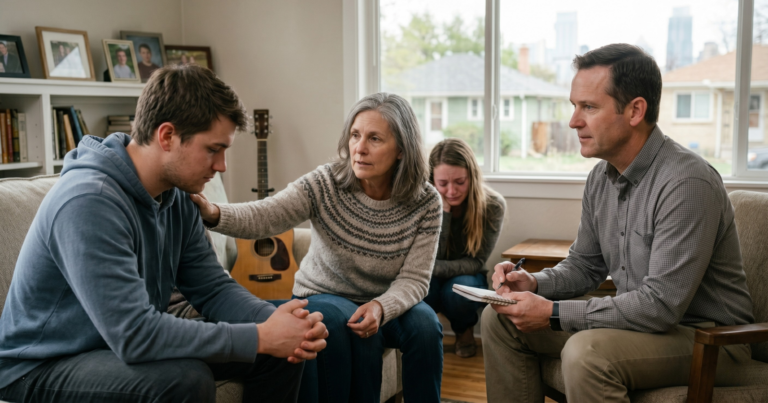
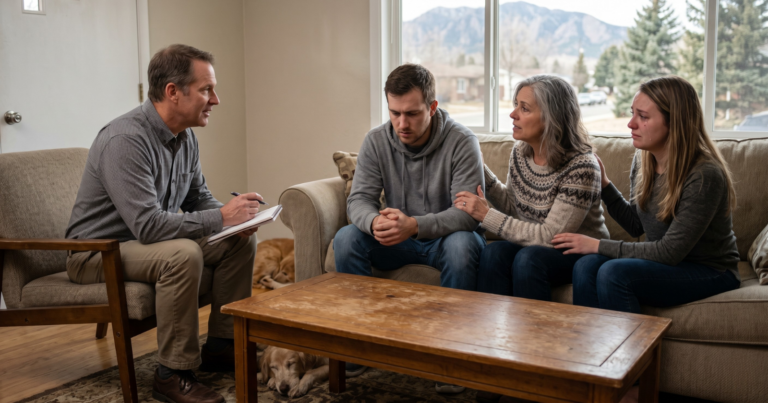
Mom agrees to drive her son to a treatment center three hours away. He seems calm and committed when they leave. Somewhere around hour two, he asks to stop for food. She agrees. He goes inside, and she waits in the car. Ten minutes pass. Twenty. He comes back changed, quieter, glassy-eyed. By the time they reach the facility, he’s decided he doesn’t need to go. He wasn’t as bad as everyone said. He can handle it on his own. She drives him home because what else can she do? He is an adult. She can’t force him.
This scenario plays out every single day in Texas. It plays out in Houston traffic and on empty West Texas highways and in the parking lots of small-town gas stations. It plays out because the families trying to bridge this gap are not trained to navigate it and they shouldn’t have to be. They are exhausted, emotionally depleted, afraid, and hoping desperately that this time will be different.
Shame is one of the most dangerous parts of relapse. Many people internalize it as proof they are broken or incapable of recovery which can spiral into secrecy, isolation, and continued use. Shame convinces people to stop reaching out. The same dynamic plays out during transport. A person who begins to feel doubt, fear, or shame during the journey to treatment needs someone who knows how to respond to those feelings with clinical understanding and steady calm — not a family member whose own fear and grief are running just as hot.
As one Dallas-area drug intervention program has observed, many clients arrive because their family made it clear it was time — not because they were ready on their own. That’s okay. Willingness doesn’t always come before treatment. Sometimes it develops during treatment, once the fog begins to lift and real progress becomes possible. But getting to treatment in the first place requires surviving the transition intact.
The Texas-Sized Scope of the Challenge
Texas’s drug crisis is not monolithic. It looks different in El Paso than it does in Beaumont. It looks different in the Houston suburbs than it does in Lubbock. And the resources available to families — including the infrastructure to support someone in transition to treatment — vary as widely as the geography.
Urban counties with major metropolitan areas show the highest absolute numbers of overdose deaths, with Harris County and Dallas County leading significantly. In those cities, there are emergency rooms, crisis centers, peer navigators, and multiple treatment options within a reasonable distance. Families in Houston dealing with drug intervention or families seeking drug intervention in San Antonio have more local options than those in rural parts of the state — but even in the cities, the gap between willingness and safe arrival remains real.
But in the communities that stretch between those metro areas, the small cities, the agricultural towns, the tribal lands, the border counties, the gap is much wider. The spread of the opioid crisis from urban to rural areas in Texas has been well-documented, with rural counties showing the most dangerous combination of high need and fewest resources. A person in one of those communities who says yes to treatment may be looking at a half-day journey under the best circumstances, and that journey cannot safely be entrusted to a family member driving alone while managing their own trauma and fear.
One in four Texans has experienced an opioid overdose or poisoning, or knows someone who has, according to the Texas Opioid Response campaign. The families navigating this in real time in every corner of this enormous state deserve professional support for every phase of the recovery process, including the transition to treatment itself.
The Methamphetamine Factor
While much of the national conversation about drug addiction focuses on opioids, Texas’s dominant drug threat in 2026 is methamphetamine — and that changes the dynamics of sober transport in important ways that families need to understand.
Methamphetamine has emerged as Texas’s primary drug threat, with exceptionally high purity levels from Mexican sources and increasing treatment admissions. Families dealing with meth intervention in Texas face a profoundly different presentation than opioid addiction. The psychosis, paranoia, agitation, and erratic behavior that can accompany methamphetamine withdrawal and early recovery create a set of challenges during transport that require a specific kind of training and calm — not just a willing family member in the driver’s seat.
Someone coming off a methamphetamine binge during a long drive through rural Texas can become disoriented, combative, or dangerously impulsive in ways that a family member is completely unprepared to manage safely. And because the Texas landscape has endless roads, limited stops, and sparse population, it offers few options if something goes wrong in transit — having a trained professional present is not a luxury. It is basic safety.
This is particularly true given that Texas’s drug supply increasingly reflects polysubstance use — people using methamphetamine alongside fentanyl, benzodiazepines, or alcohol — which means withdrawal presentations can be medically complex and unpredictable. A sober transport professional is trained to recognize early signs of a medical emergency and respond appropriately, including knowing when to pull over and call for emergency services rather than continuing a journey that has become unsafe.
What a Professional Sober Transport Actually Does
Most families have never heard of sober transport until they need it. And most of them, when they first hear about it, picture something clinical and institutional — an ambulance, a hospital transfer, something sterile and scary. That is not what this is.
A professional sober transport is, at its core, a human service. It is a trained, compassionate professional — often someone with their own lived experience of addiction and recovery — who accompanies a person from their current location to a treatment facility. Their role is not medical in the clinical sense, though they are trained to recognize and respond to medical concerns. Their role is relational and stabilizing.
They understand how to have a calm conversation with someone who is second-guessing themselves. They understand the manipulation tactics — not as a moral failing, but as a symptom of a brain in the grip of addiction fighting to protect its supply. They know when to engage and when to give space. They know how to make a terrifying journey feel, if not easy, at least manageable.
Texas Health and Human Services officially recognizes peer-supported transportation as a recovery support service — an evidence-based practice that supports long-term recovery and recovery quality, funded in part through SAMHSA grants and providing support before, during, and after treatment. In other words, the research and the policy framework both support what families who have used this service already know: getting there is not a small thing, and getting there safely makes a real difference in what comes next.
Sober transport services in Texas through G3 Recovery provide exactly this — a bridge between the moment of willingness and the moment of arrival, guided by professionals who understand both the clinical and the human dimensions of that transition. It is not just about getting from point A to point B. It is about protecting the decision that took a family years to reach.
The Families Carrying This Alone
There is a particular kind of exhaustion that comes from loving someone in active addiction in Texas — especially in a community where resources are far away, where stigma keeps people quiet, and where the myth of self-sufficiency runs deep.
Texas cultural identity is built on toughness and independence. Asking for help, especially for something as stigmatized as addiction, cuts against a grain that runs through everything from small-town church communities to big-city professional cultures. Families carry this in silence for far too long. And when they finally reach out, they often try to manage the entire process themselves, including the transport, because asking for one more thing feels like one more admission of how bad things have gotten.
But the data is clear. Research consistently shows that 40 to 60% of individuals treated for substance use disorders will experience at least one relapse — not because they are weak or because treatment doesn’t work, but because addiction is a chronic condition that requires sustained support at every stage. The transition to treatment is not the moment to economize on support. It is the moment to surround a person with every resource available.
For families who have been carrying this alone, family consulting offers a structured way to understand the full landscape of what is available — including the support services that exist specifically to make this transition safer and more likely to hold. And for families who have already navigated the intervention process, recovery coaching ensures that the work doesn’t end when treatment begins — because the research is equally clear that sustained support after treatment dramatically improves long-term outcomes.
What Texas Families Need to Know Right Now
If you are in Texas and a loved one has said yes to treatment — or you believe that moment is coming soon — here are the most important things to understand.
First, act on your willingness immediately. The window between “I’ll go” and “never mind” can close within hours. Do not wait until tomorrow to make calls. Do not give it a few days to make sure they really mean it. The moment willingness surfaces is the moment to move.
Second, do not assume that a family member is the safest transport option. The person who loves someone most is also the person most likely to be manipulated, most likely to capitulate to a request to pull over or turn around, and least equipped to manage the clinical and emotional dynamics of someone in transition to treatment. Love is not the same as training.
Third, the size of Texas is not an obstacle to getting help — but it does require planning. Treatment facilities across the state range from the Hill Country to the Gulf Coast to the Panhandle, and finding the right match for a person’s needs is not something to figure out in the moment. Be Well Texas is a statewide program providing virtual visits and connections to treatment for alcohol and drug use, with no insurance required — one of multiple state resources designed to help families navigate the landscape before a crisis forces a rushed decision.
Fourth, if someone you love is in active addiction in Texas right now and not yet ready for treatment, the groundwork can still be laid. A professional intervention in Texas — guided by trained professionals, specifically one using the ARISE® invitational model, which invites rather than confronts — has been shown to get over 60% of people into treatment within the first week. The willingness moment is not something to wait passively for. It is something that can be created, compassionately and deliberately, with the right support. Families in the major metros can also connect with city-specific intervention support in Austin, Houston, Dallas, and San Antonio.
Recovery Begins Before the Front Door
Across Texas, in Houston and Dallas and San Antonio and in the towns between them that don’t make the news, families are sitting with the same fear tonight. They are wondering if their person will say yes. They are wondering, if they do, whether this time will be different.
It can be. Recovery is not a fantasy. According to the CDC and the National Institute on Drug Abuse, 75% of people who experience addiction eventually recover. Research indicates that approximately 60% of individuals with substance dependence eventually enter sustained recovery, and multiple treatment episodes may have a cumulative positive effect leading, ultimately, to sustained recovery. Each step toward treatment matters. Each attempt builds something, even when it doesn’t immediately hold.
But recovery doesn’t begin at the treatment center’s front desk. It begins the moment someone says yes, and everything that happens between that moment and the moment of arrival either supports that decision or erodes it.
The team at G3 Recovery has been there personally — not just as professionals but as people who have loved someone through addiction and understand exactly what this transition feels like from the inside. They know the geography of Texas. They know the middle-of-the-night phone calls. They know what it means to have someone finally say yes, and how precious and fragile that moment is.
If your loved one is ready — or nearly ready — don’t leave the most critical hours of this journey to chance.
Book a Consultation
It’s easy and free!