
The Fall in Chicago Overdose Deaths Has Stalled in 2026. A Family Plan Matters More Now.
Since the national overdose peak in 2023, Cook County has posted the largest reduction in overdose deaths of any U.S. county, its health officials say. Our own count of the Medical Examiner’s case files shows that fall nearly stopping this year, while a statewide naloxone order runs through next October. Both facts point a family toward the same place: a plan of its own.
What do the latest numbers say about Chicago overdose deaths?
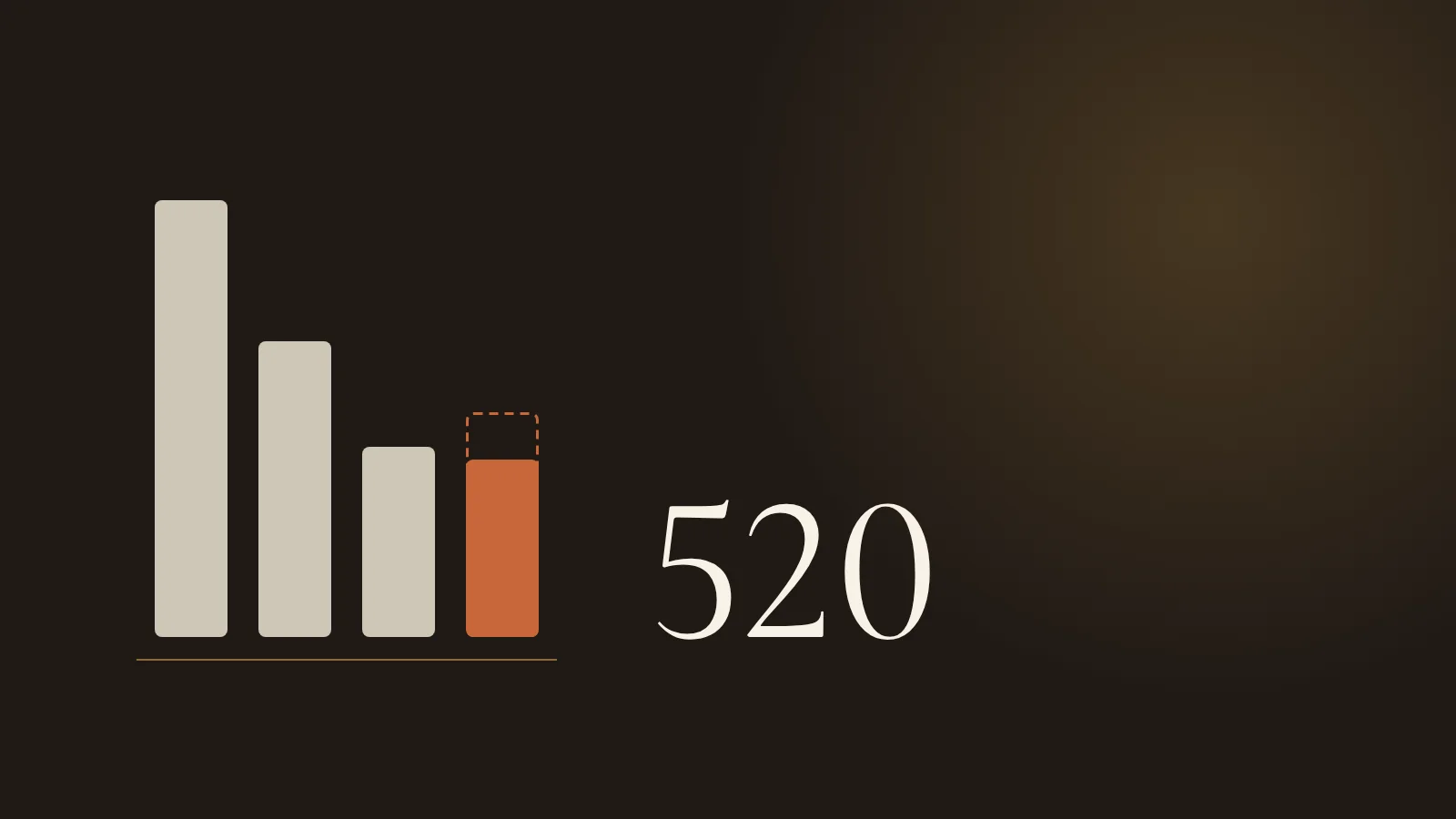
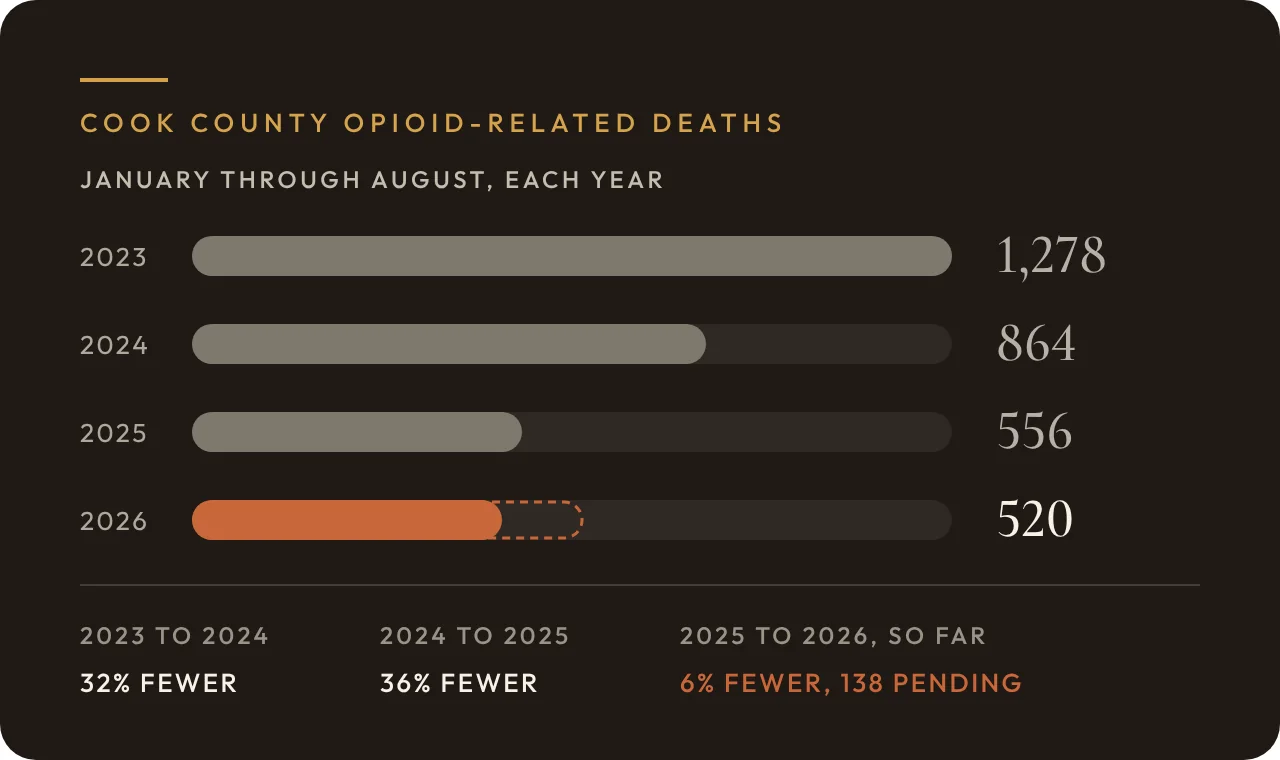
Chicago overdose deaths are barely falling in 2026. G3’s count of the Cook County Medical Examiner’s case archive finds 520 opioid-related deaths from January through August 2026, against 556 in those months of 2025, after a 36 percent drop the year before. With 138 deaths from those 2026 months still pending a ruling, even that gap could close.
These figures are our own count, not an official statistic. We built them from the Medical Examiner Case Archive, Cook County’s daily updated public record of deaths under the office’s jurisdiction, counting cases flagged as opioid related, by date of death, from January through August of each year, as the archive stood in mid-November 2026. One caveat outweighs the rest. A case still awaiting a ruling carries no opioid flag, and 138 deaths from January through August 2026 were still pending, against 3 from the same months of 2025. If 36 or more of them are ruled opioid related, 2026 will match or pass 2025.
In its January 2026 year-end release, the Medical Examiner’s Office reported 2,001 opioid overdose deaths in 2022, 1,822 in 2023 and 1,169 in 2024, and called opioid overdoses the greatest cause of unnatural deaths in Cook County. About 82 percent of the confirmed 2025 deaths involved fentanyl.
In June, the joint Cook County and Chicago opioid report counted 1,138 opioid overdose deaths in 2024, 835 of them in Chicago, and put the city’s rate at 28.7 per 100,000 residents, nearly double the Illinois rate of 14.6. Families across the city and suburbs can see how we work on our Chicago interventionist page.
Why has the decline stalled?
The archive cannot say why, and we will not guess. What officials and reporters have documented this year is a drug supply that keeps changing shape.
In July, CBS News Chicago reported that the Medical Examiner’s Office had linked seven Cook County deaths so far in 2026 to cychlorphine, a synthetic opioid the station described as up to 10 times stronger than fentanyl. The youngest person who died was 16. A spokesperson for the Drug Enforcement Administration (DEA) said agents were seeing it more often in fentanyl seizures, and that it might take multiple doses of naloxone to have its desired effect. No test strip can detect it.
In early September, the Chicago Department of Public Health (CDPH) warned of a possible spike after emergency crews responded to 35 suspected opioid overdoses in a single day, nearly double the city’s daily average of 19, CWB Chicago reported. The calls were concentrated in South Shore and Chatham, and the department did not name a specific drug. Officials urged residents to carry naloxone and to avoid any pill not prescribed by a doctor and dispensed by a pharmacy.
None of this erases the progress. It does describe a supply that is harder to predict. Our family guide to fentanyl and opioids explains why a counterfeit pill or a bag of cocaine can carry an opioid the buyer never chose.
A flatter line on a chart is still a line made of people. If someone in your house is using, the question was never what the county is doing. It is what your family is going to do this month.
What does the Illinois naloxone standing order allow?
The order lets naloxone move without an individual prescription. Its current version, the Illinois Department of Public Health standing order signed October 29, took effect November 1, 2026, and expires October 31, 2027. It is issued by the department’s director and authorizes “naloxone entities” to obtain and distribute opioid reversal medication.
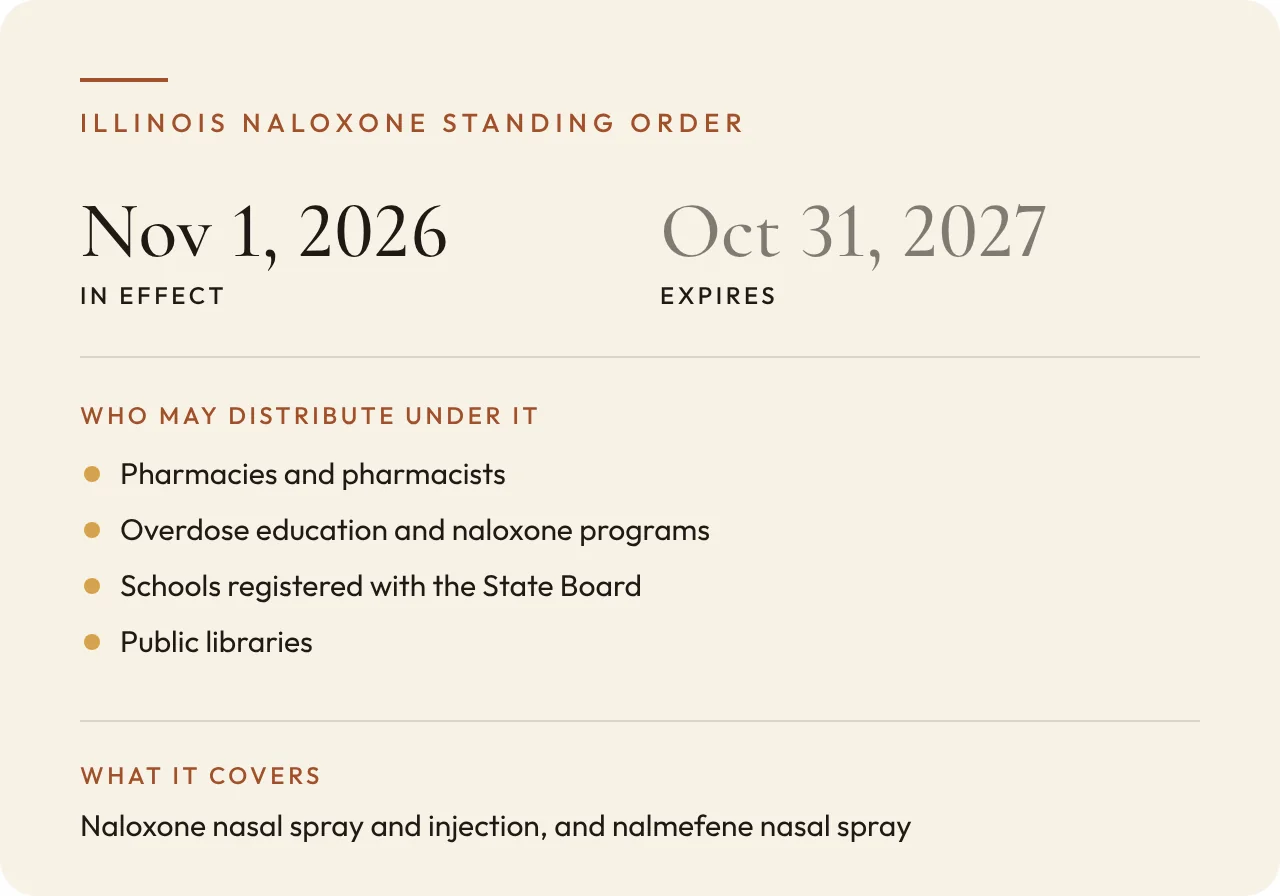
Those entities include pharmacies and pharmacists, overdose education and naloxone distribution programs, schools registered with the Illinois State Board of Education, and public libraries. The order covers naloxone nasal spray and injectable naloxone, plus nalmefene nasal spray, another opioid reversal medication. It tells distributors to dispense at least two kits, and it authorizes unlimited refills.
For a family, the practical point is this: the 4 mg naloxone nasal spray needs no prescription at all; the order’s own comparison table calls it the most common formulation and notes it is available over the counter, following the FDA’s approval of over-the-counter naloxone in March 2023. Given the DEA’s warning about newer opioids, two doses in the house are a reasonable floor, not an extravagance.
If you think someone is overdosing, call 911, give naloxone and stay with them. If you are unsure whether what you are seeing is an emergency, our guide to when to call 911 and when to call 988 lays out the difference. When in doubt, call 911.
Families put everything into the day someone says yes, and then the first week home arrives with no plan at all. I ask about discharge before admission. Where will they sleep, who will drive them, what happens on the first hard night. Those answers matter as much as the bed.
Can a Chicago family make someone go to addiction treatment?
Not through Illinois’ mental health law on addiction alone. Families who have heard of Florida’s Marchman Act or Ohio’s Casey’s Law often assume Illinois has a version of its own. The law Illinois uses for involuntary psychiatric treatment points the other way.
Illinois handles involuntary psychiatric treatment through the Mental Health and Developmental Disabilities Code, and the code’s definition of mental illness, 405 ILCS 5/1-129, expressly states that it “does not include” a substance use disorder. An amendment taking effect January 1, 2027, under Public Act 104-698, updates other wording in that definition and keeps the substance use disorder exclusion in place. This is general information, not legal advice.
The picture changes when addiction travels with psychosis, mania or a real danger to safety. Then the mental health process may apply, with its short and strict clocks. Our guide to mental health intervention in Illinois walks through the petition, the certificate and the five-day hearing window, and our overview of involuntary psychiatric pathways explains how those tools fit beside a planned conversation.
For most Chicago families facing drug or alcohol use without that kind of crisis, the lever is persuasion: a prepared, rehearsed family intervention that asks for a yes and has a bed ready when it comes.
In my experience, the person at the center of this usually knows something is wrong. What they rarely hear is the whole family saying it once, calmly, in the same words. That is most of what an intervention is, and it is something a Chicago family can prepare for this month.
What should a Chicago family do this month?
Start with safety, then build toward the conversation.
- FirstPut at least two doses of naloxone in the house, and one in the car, and make sure every adult knows where they are.
- SecondWrite down what you have seen, with dates: pills you could not identify, a lost job, a night in an emergency room. Specifics help any professional you call.
- ThirdAgree as a family on one message and one plan before anyone confronts anyone. Mixed messages are where good intentions go to stall.
- FourthLine up a treatment option that fits the clinical need and the budget, including any mental health symptoms, so a yes can become an admission the same day.

G3 Recovery Interventions and Consulting is based in Austin, Texas, and travels to families across Illinois. See how we work with families statewide as a professional interventionist in Illinois, or read our page for families in Chicago and Cook County. Because G3 accepts no referral fees, our treatment navigation is matched to the clinical need and your budget, and family consulting keeps the rest of the household steady through it. When the answer is yes, sober transport gets your person to the door. None of this guarantees an outcome. It gives a yes somewhere to go.